Stop Using School Pencils
Why a $10 mechanical pencil is the biggest upgrade you can make to your woodworking accuracy.
⚡ Quick Answer
For precision woodworking, the standard #2 school pencil is too soft and dulls quickly. Carpenters pencils are great for rough framing but terrible for joinery. The gold standard for modern woodworkers is a 0.5mm or 0.7mm mechanical pencil (like the GraphGear 1000) or a dedicated marking knife. Mechanical pencils ensure a consistent line width without constant sharpening, crucial for tight joinery.
When I first started woodworking, I though "a pencil is a pencil." I grabbed whatever yellow #2 was lying around the junk drawer.
The problem? Every time I sharpened it, the length changed. The tip would dull after drawing three lines, meaning my fourth line was 1/32" wider than my first. In joinery, 1/32" is the difference between a tight joint and a gap that needs filler.
I switched to the Pentel GraphGear 1000 (0.7mm) and never looked back. The retractable tip means I can drop it on the concrete floor without bending the metal sleeve—a fatal flaw of most drafting pencils in a shop environment.
Marking Tools Required
The trilogy of accuracy
Mechanical Pencil
My daily driver. Constant line width, retractable tip, no sharpening.
Carpenter's Pencil
The flat oval shape stops it from rolling away. Essential for framing, useless for fine furniture.
Marking Knife
The ultimate accuracy. Severs fibers to prevent tearout and gives your chisel a wall to register against.
My Marking Kit
Pentel GraphGear 1000
The best shop pencil ever made. Retractable tip protects it from drops. Heavy metal body feels premium.
- •Lead: 0.5/0.7/0.9mm
- •Body: Metal
- •Feature: Retractable Tip
- •Rating: 5/5
Pica-Dry Longlife
The 'deep hole' marker. Extends deep into drill holes to mark stud locations. A specialized lifesaver.
- •Lead: 2.8mm
- •Body: Plastic
- •Feature: Deep reach
- •Rating: 4.5/5
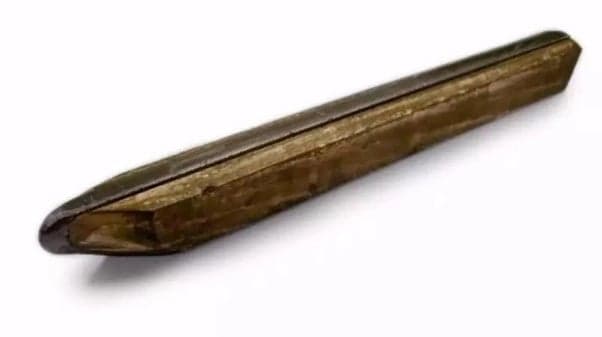
Traditional Flat Carpenter
Buy a 10-pack. You will lose them. You will break them. But nothing beats them for marking rough 2x4s.
- •Lead: Wide Graphite
- •Body: Wood
- •Feature: Anti-roll
- •Rating: 3/5
Marking Questions
A pencil line sits *on top* of the wood and has thickness (width). A marking knife severs the wood fibers, creating a physical channel for your chisel or saw to register against. For dovetails or tenon shoulders, a knife is infinitely more accurate.
Standard HB is okay, but often too soft. I prefer 2H lead for marking on wood because it stays sharp longer and leaves a crisp line without smudging. For rough construction lumber, stick with the softer, wider carpenter's pencil lead.
0.5mm is precise but snaps easily on rough grain. 0.9mm is too thick for fine joinery. 0.7mm is the sweet spot for general shop tasks—strong enough to trace a square, fine enough for accurate crosscuts.
The Accuracy Hierarchy
- 1.Marking Knife: Zero width. Physical cut.
- 2.0.5mm Mechanical: Precise, fragile.
- 3.0.7mm Mechanical: The sweet spot.
- 4.Standard #2: Too varying.
- 5.Carpenter's Pencil: Only for 2x4s and framing.
Pro Tip: The 'Tick' Mark
Don't draw a line when measuring. Draw a "V" or a "tick" mark. The point of the V is the exact measurement. A straight line can be slanted, but a V point is absolute.