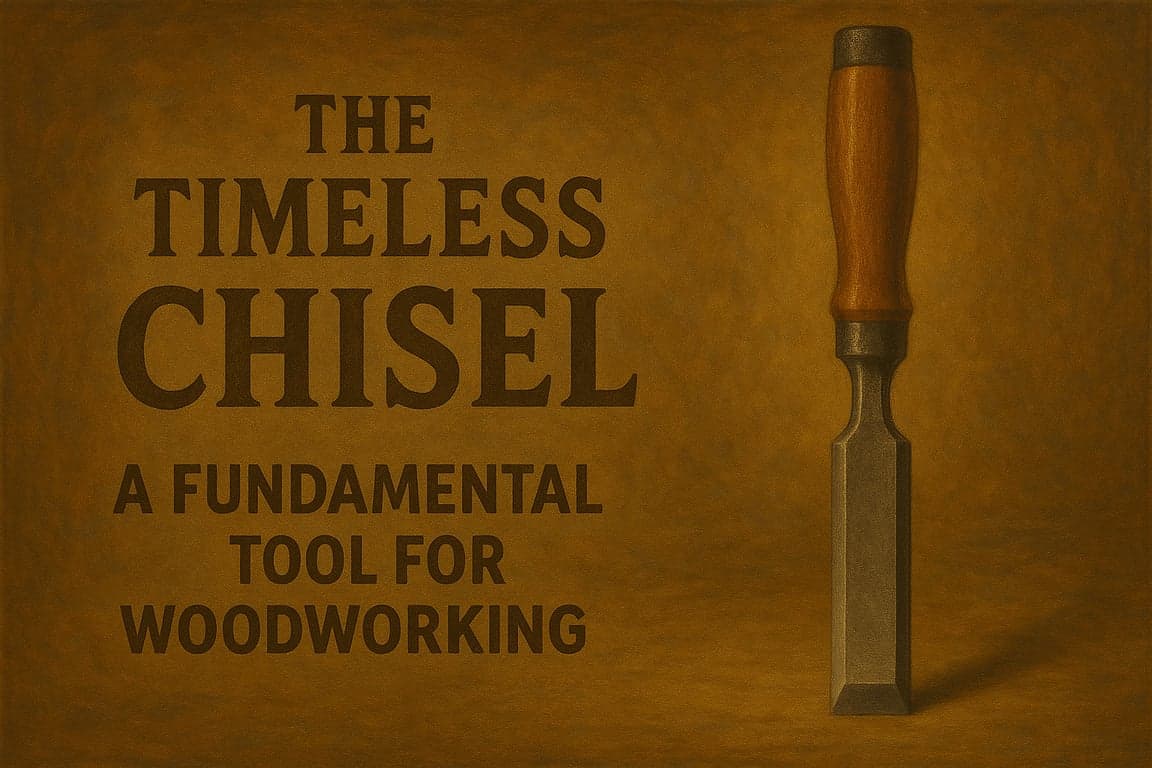
The Most Satisfying Tool in the Shop
In a world of screaming routers and table saws, the silence of a sharp chisel is pure therapy.
⚡ Quick Answer
A woodworking chisel is the definitive precision instrument for joinery. Unlike power tools that remove material indiscriminately, a sharp chisel pairs control with force to clean up mortises, pare tenons, and remove dried glue. For beginners, a set of bevel-edge bench chisels (like the Narex Richter series) offers the best versatility. The most critical skill to master is sharpening—a dull chisel is dangerous and ineffective.
I remember the moment vividly. I was building the frame for myHidden Bookcase Door, and I had to cut the mortises for the heavy-duty pivot hinges. One slip with a router, and the entire frame would be ruined.
My palms were sweating. I put the router down. It was too loud, too aggressive, too risky. I needed control. I needed to feel the wood.
"In a world of screaming power tools, the silence of a sharp chisel paring away a paper-thin shaving is pure therapy."
I picked up my 3/4-inch chisel. With a few careful taps of the mallet and some gentle paring by hand, I created a perfect, snug pocket for that hinge. No noise, no dust cloud, just precision. That's when I fell in love with the chisel.
The Glue Scraper Trick
While the chisel saved the day on the secret door, it proved its worth again during myBasement Barbuild. When joining the spalted maple slab, I had glue squeeze-out that hardened before I could wipe it.
A sander would have gummed up instantly. But a sharp chisel? It acted like a scraper, lifting the dried glue right off the surface without damaging the beautiful grain underneath.
Anatomy of a Chisel
Simple tool, complex geometry
The Back
Must be perfectly flat. This is the reference surface for every cut.
The Bevel
Typically ground to 25° and honed to 30°. This is the cutting edge.
The Handle
Hornbeam or Beech are classic. Fits the hand for paring, durable for chopping.
The Set I Recommend
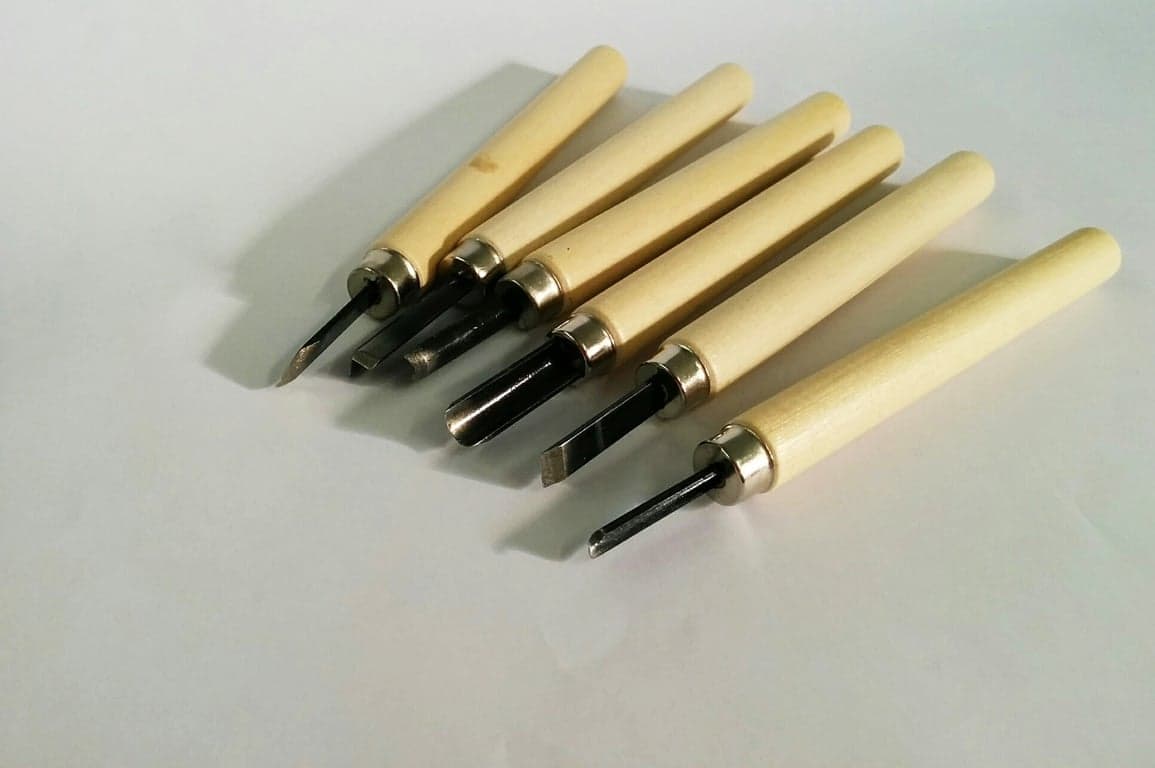
Narex Richter
My daily drivers. The cryogenic steel takes a scary edge and holds it. The slim handles are perfect for paring.
- •Steel: Cr-V (Cryo)
- •Handle: Ash
- •Style: Bevel Edge
- •Rating: 5/5
Chisel FAQ
It's a sharpening technique that uses sandpaper regarding on a flat surface (glass or granite) instead of expensive water stones. You progress from low grit (80) to ultra-high grit (2000+), polishing the blade until it's 'scary sharp'. It's the cheapest way to get a razor edge.
A bevel-edge chisel has angled sides, allowing it to fit into tight corners like dovetails. A mortise chisel is thick and square, designed to be struck hard with a mallet for chopping deep holes. Start with bevel-edge; they do 90% of the work.
They hit the sweet spot of price vs. performance. The steel is Cryogenically treated (holds an edge longer) but isn't impossible to sharpen like some PM-V11 steels. They are arguably the best value chisel on the market today.
Wood mallet for wood handles (to prevent mushrooming/cracking). Steel hammer is okay for plastic-handled 'beater' chisels, but a wooden mallet offers better control and feedback.
Sharpening 101
A dull chisel is a dangerous chisel. It requires more force, which leads to slips.
- 1.Flatten the Back: Use coarse stones until the back is mirror flat.
- 2.Grind the Bevel: maintain 25° angle.
- 3.Hone Micro-Bevel: Lift 5° (to 30°) and polish the very tip.
Safety First
Never place your hand in front of the cutting edge. It sounds obvious, but when you're paring a joint, it's easy to forget.
If the chisel slips, it should cut air or the bench, never you.