
The original project, with better instructions
The room was ready. The concrete wasn’t.
Sometimes we need to be reminded that the DIY world is filled with moms, dads, students, retirees, cat lovers and unfortunately cat haters, all with a full day of responsibilities. On occasion, if corners aren’t cut then the bigger picture project will not come to fruition. Yeah, you guessed it—painting the unfinished concrete portion of the basement was just that project for me.
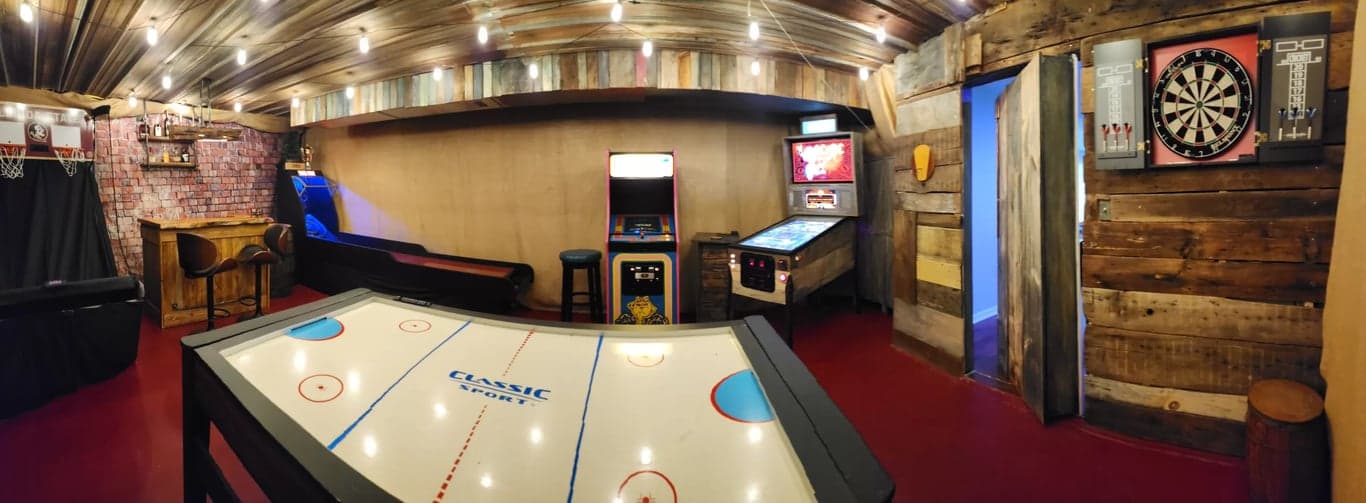
I wanted the floor to stop looking like the part of the basement I hadn’t gotten to yet. I used BEHR Premium Low-Lustre Enamel Interior/Exterior Porch & Patio Floor Paint, worked around the arcade machines, and accepted that this was a practical room refresh.
Make the next decision
What are you starting with?
Make this decision before buying a roller. If the floor’s condition is uncertain, settle that first.
Choose the whole coating system.
Confirm that your concrete is suitable for the paint you plan to use. Put its preparation products, primer, and drying requirements on the same list as the color. My old shopping list was too short.
Read the current paint directionsRead every path
Choose the whole coating system.
Confirm that your concrete is suitable for the paint you plan to use. Put its preparation products, primer, and drying requirements on the same list as the color. My old shopping list was too short.
Read the current paint directions →Find out what is underneath.
Identify the old finish and check for loose or peeling areas before choosing a new coating. When you cannot identify it, ask the paint manufacturer how to check compatibility instead of treating the floor as bare concrete.
Check the manufacturer’s instructions →Pause the paint purchase.
A damp floor, recurring white deposits, or unexplained coating failure deserves investigation before another layer goes down. Ask the coating manufacturer or a qualified local professional how to assess your slab. This project does not diagnose moisture problems.
Start with product support →Before opening the can
Match the preparation to the paint.
For the BEHR Low-Lustre Porch & Patio family used here, the current directions call for clean, sound, dry concrete; cleaning and etching uncoated concrete; and a concrete bonding primer. New concrete needs at least 30 days before coating. Previously painted surfaces have different preparation instructions. Use the full directions for your exact can, including ventilation and protective equipment.
Read BEHR’s preparation, application, and safety information →
Don’t treat an online supply list as permission to mix cleaners or substitute an etcher. Choose preparation products that the coating manufacturer specifies for your floor.
Three decisions that make the job
Clear the room. Prepare the slab. Protect the finish.
The original project took a few hours of hands-on work. The calendar was another matter: cleaning, drying, recoating, and bringing furniture back all needed their own space.
Make room to work—and a way out.
I wasn’t moving every large arcade game out of the basement. I grouped what I could into a corner and tackled the main area first. Plan your sections and exit before painting yourself into the far end of the room.
Leave the next section accessible without dragging furniture across fresh paint.
Spend the effort underneath the color.
My original routine was a sweep, vacuum, and scrub. Today I would start with the full preparation instructions above, then keep traffic and loose grit away from the ready-to-paint area.
Avoid using a last-minute damp wipe as a substitute for a properly prepared, dry surface.
Paint evenly. Let the room wait.
Keep a brush handy for the edges and work back toward your exit. Follow your coating’s coat count and recoat interval; an extra-thick coat is not a shortcut. Plan where the furniture will stay while the finish develops.
The first game night can wait longer than the first dry-to-the-touch check.
Plan the calendar and the cart
Dry to the touch is only the first milestone.
| Milestone | Listed time |
|---|---|
| Dry to touch | 1 hour |
| Recoat | 4–6 hours |
| Normal use | 72 hours |
| Clean with mild detergent | After 30 days |
Source: BEHR’s current product directions. These milestones are not a promise about your basement conditions or permission to roll a heavy machine across fresh paint.
The old $50–100 estimate is history.
That was my original estimate for this project, not a quote for yours in 2026. I reported using a gallon across roughly 300 square feet; don’t use that anecdote to order paint for every surface and coat.
Measure your room and calculate the total coating area across all planned coats. Use the coverage on your chosen product’s label, then price the preparation, primer, paint, applicators, and any equipment you need. Reusing a tray or brush may save money. Leaving a required preparation step out of the budget won’t.
For the painting stage
A few useful supplies. Check what you already own.
These are shopping options, not tools I comparison-tested for this project. Choose the coating and its preparation system first; then fill the gaps in your kit.
As an Amazon Associate, I earn from qualifying purchases at no additional cost to you.
- - Choose nap length for the surface texture.
- - Keep extra covers if the project spans multiple coats.
- - Test adhesion on delicate finishes.
- - Pull tape before paint fully hardens when the paint system calls for it.
- - Fit and strap comfort matter if you will wear them for hours.
- - Check whether the cap can mark delicate floors.
Living with the result
It became part of the room.
Though I would love to feed you some hippy dippy life lesson metaphor on how you don’t need to paint the floor anymore because you have already accomplished what you need mentally—we both know that wouldn’t cut it. The actual paint made the room feel more finished.
In my original one-year update, I reported that the floor had held up well with occasional touch-ups. Moving heavy arcade machines caused some of those marks. That is the experience behind this guide; it isn’t a new long-term inspection or a warranty for another basement.
I’d still separate “looks good for our room” from “ready for every kind of wear.” The floor had a supporting role in BarKode. The games, the bar, and the people around them were the reason to finish it.
Before you start painting
What paint did you use on your basement floor?
I used BEHR Premium Low-Lustre Enamel Interior/Exterior Porch & Patio Floor Paint in the original BarKode build. This is my project experience, not a comparison test of floor paints. Check the current directions for the exact product you buy.
Can I skip etching and primer?
Do not copy my original shortcut as a general method. Your slab and chosen coating determine the preparation. The current BEHR directions linked below include preparation and primer instructions for uncoated concrete.
How much did your floor cost?
My original project estimate was $50–100. That is a historical estimate, not a current shopping budget. Price the complete preparation and paint system for your measured area, including additional coats and tools you do not already own.
How long should I wait before moving furniture back?
Use the coating’s directions for return to service, and ask its manufacturer about heavy furniture or rolling loads. Touch-dry paint does not mean the floor is ready for an arcade machine. My original project required touch-ups after moving heavy games.
Can I paint over an already painted basement floor?
First identify the existing coating and whether it is firmly attached. A failing layer is a poor starting point for a new finish. Follow the chosen paint’s instructions for previously coated surfaces; ask the manufacturer when compatibility is uncertain.
Keep building BarKode
The floor is one part of the story.


Updated September 24, 2026: current product directions checked and the original shortcuts clarified. Project photographs and reported results are from the original BarKode build.