
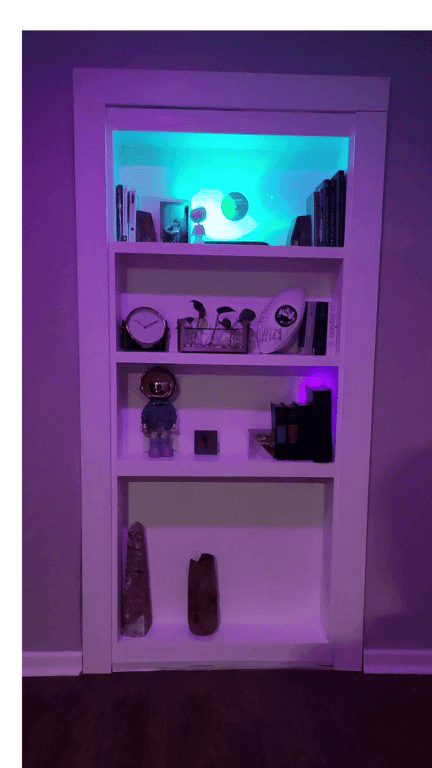
One live build
TheCraftyCatsman Bookcase Calculator
Enter your dimensions, explore the parts, and print your cut list.
Start with the opening.
Enter finished-opening measurements. Decimal eighths work here: 35.875 means 35⅞ inches.
- Case body
- 35″ × 78½″
- Overall depth
- 8″
- Interior width
- 33½″
- Between shelf panels
- 14.8″
Fit, dado, and pivot settings
Change these when your opening or hardware layout calls for a different clearance.
Planning study · verify the opening, swing path, pivot hardware, and loaded weight before cutting.
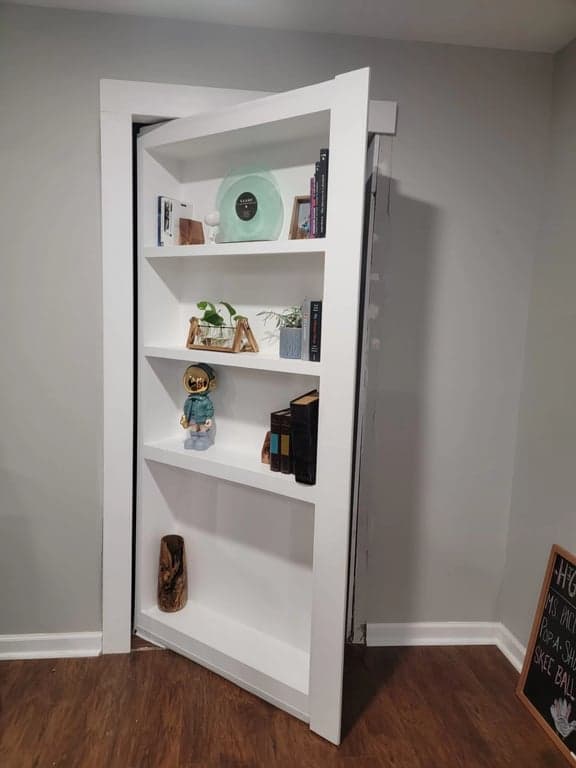
Opening the cabinet shop
The finished door stays in view while the live model loads. The Crafty CatsmanBuild it your way
Free Custom Cut List Calculator
This free hidden bookcase door calculator turns your opening dimensions, shelf count and material selections into a live 3D model and printable cut list. Explore the assembly and estimate materials from the same measurements. Confirm your actual stock thickness, joints, pivot hardware and swing clearance before cutting.
Reference ranges
Standard Bookcase Door Measurements
Standard Door Opening
- Width: 30-36 inches (standard interior door)
- Height: 80 inches (standard door height)
- Starting gaps: ½" per side, ½" above and 1" below; adjust for your hardware
Bookcase Dimensions
- Depth: 7-8 inches total
- Start with 4 interior shelves; fixed top and bottom are separate parts
- Standard wood: Poplar for frame, cabinet-grade plywood for construction
For a completely custom cut list based on your exact measurements, use the interactive calculator above.
What goes into the build
Materials to plan for
Lumber & Plywood
- Case plywood for the sides, shelves, top and bottom
- A separate plywood back; the calculator starts at ¼"
- Face-frame stock for 1½" stiles and upper rails
- Wider stock for the 3½" bottom face rail
Hardware
- Heavy-duty pivot hinges
- Chain bolt for latch mechanism
- Decorative hollow book (for pull)
- 16 gauge wire for pull mechanism
- Wood glue, screws, and brad nails
Amazon Hardware Queue
Hidden Door Hardware Worth Pricing Before You Cut
The calculator handles dimensions, but hinge capacity, latch choice, caster support, shelf-pin layout, lighting, and friction points decide whether the finished bookcase behaves like a door instead of a wobbly cabinet.
As an Amazon Associate, I earn from qualifying purchases at no additional cost to you.
- - Verify load rating against the fully loaded bookcase.
- - Confirm swing direction, floor condition, and mounting clearances.
- - Align the pull path before drilling.
- - Test latch tension before closing up the back side.
- - Verify floor clearance and wheel path before adding one.
- - Do not use a caster to hide undersized hinges.
- - Do not rely on magnets as structural hinges or security.
- - Check pull strength against how the door is used.
- - Confirm pin diameter.
- - Drill test holes in scrap before touching visible panels.
- - Plan battery access before mounting.
- - Use warm or neutral light based on the room finish.
- - Check dimensions before designing the pull.
- - Reinforce the connection if it will operate a latch.
- - Use only where a low-friction surface is safe.
- - Clean the surface before applying adhesive tape.
Ready to build?
Take the custom cut list back to the full hidden door guide.
Get step-by-step instructions, hinge guidance, latch details, and the full build sequence in the comprehensive hidden bookcase door guide.